


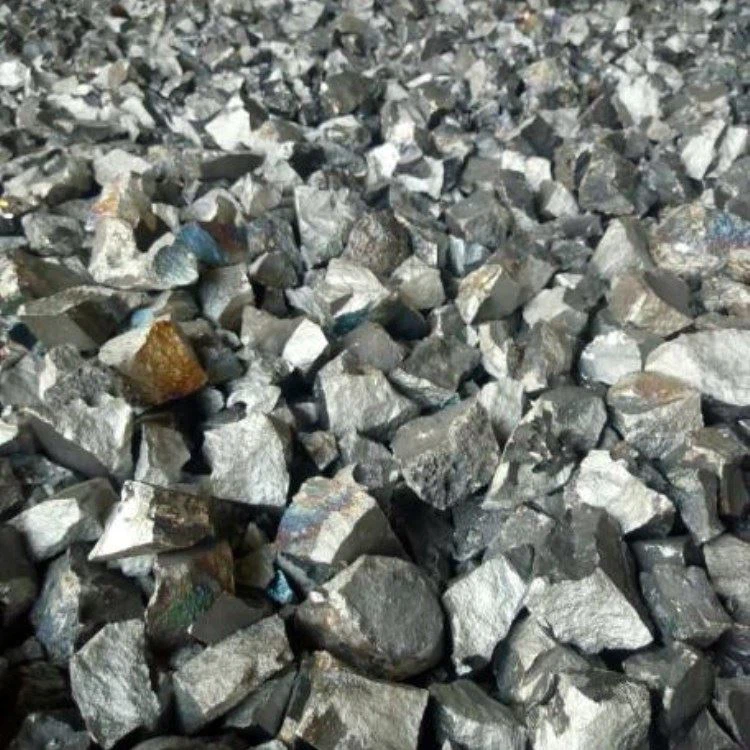
High Carbon Ferro Manganese
Description High Carbon Ferro Manganese is intentionally present in most grades of steel and is a residual constituent of virtually all others. Aside from its historic importance as a desulfurizer and deoxidizer, manganese is undoubtedly the most prevalent alloying agent in steels, after carbon....
Description
High Carbon Ferro Manganese is intentionally present in most grades of steel and is a residual constituent of virtually all others. Aside from its historic importance as a desulfurizer and deoxidizer, manganese is undoubtedly the most prevalent alloying agent in steels, after carbon. Understandably, therefore, ferromanganese is the most widely used ferroalloy.
Of the 15 steelmaking manganese products recognized in ASTM standards, the most important is High Carbon Ferro Manganese. It is generally sold in two manganese concentrations: 74-76% and 78-82%, with the latter predominating. Carbon content will not exceed 7.5%, silicon will be less than 1.5% and sulfur and phosphorus, 0.03 and 0.3 %, respectively. A low phosphorus variety is available as well.
High Carbon Ferro Manganese are generally chosen on the basis of carbon content. Inexpensive standard ferromanganese is used when the steel is well oxidized (low in carbon) or when higher residual carbon contents are allowable. As maximum steel carbons become more restricted it is necessary to switch to the more costly low-or medium carbon ferroalloys. The final aim chemistry will determine which addition agents can or cannot be used. Silicon content is often a second deciding factor.
High Carbon Ferro Manganese is one of the most widely used ferroalloy in the world. High-carbon ferromanganese is a manganese alloy, smelted directly from manganese ores. Its manganese content ranges from 70-80 wt% and its carbon content from 6-7 wt%. It is the most-used ferroalloy in terms of quantity and its applications are mostly steel production (90%), with the remaining 10% being used in foundries and welding.
Ferro Manganese is produced by reduction of Manganese Oxide in blast furnaces or electric furnaces. It is a very flexible process in that the slags can be reprocessed into Ferro Silico Manganese which in turn can be further refined into Medium and Low Carbon Ferro Manganese. Ferro Manganese was invented in 1860 by Sir Henry Bessemer as a way to add Manganese during steel making with the advantage that a combination of Iron and Manganese Oxide results in a lower melting point for the alloy Ferro Manganese compared to pure Manganese Oxide. Standard Ferro Manganese (or High Carbon Ferro Manganese) is a commonly used alloy produced by the reduction of manganese ore in the presence of carbon. Typically it contains 75% manganese and 7% carbon. Worldwide production of Ferro Manganese in 2008 was approximately 4.5 million tons, with China being the worlds largest producer.
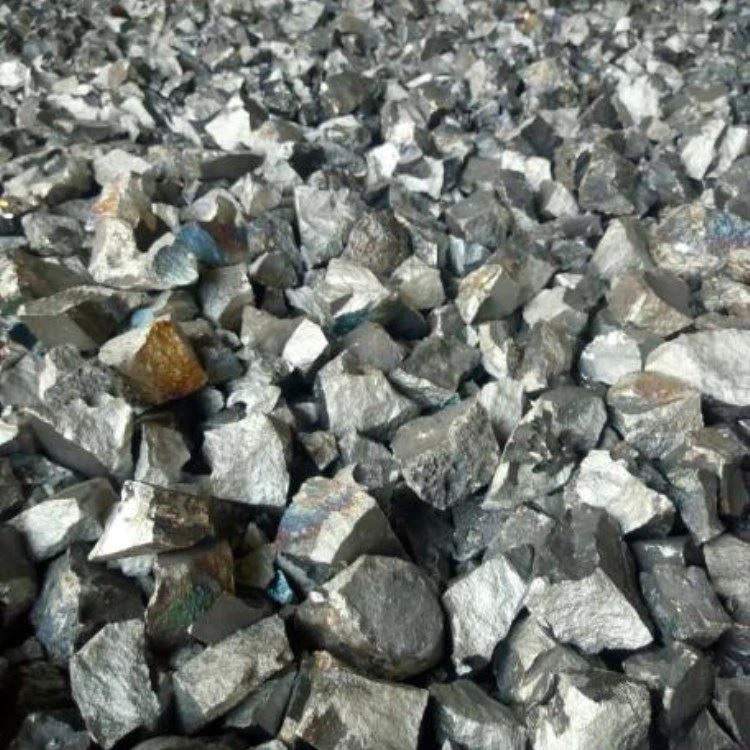
Features
-Impeccable chemical composition
-Free from impurities
-Corrosion proof
-Fine anti-oxidant characteristics
-Low melting point
-Sturdiness
Ferromanganese is a ferroalloy with high manganese content (high-carbon ferromanganese can contain as much as 80% Mn by weight). It is made by heating a mixture of the oxides MnO2 and Fe2O3, with carbon (usually as coal and coke) in either a blast furnace or an electric arc furnace-type system, called a submerged arc furnace. The oxides undergo carbothermal reduction in the furnaces, producing the ferromanganese. Ferromanganese is used as a deoxidizer for steel.
Advantages
1. The invention can significantly reduce the smelting power consumption and is characterized in that the lower price coal is used as the energy of the Rotary kiln. Using coal to heat manganese ore outside the furnace and adding hot ore to the furnace can greatly reduce the electricity consumption for heating the ore in the electric furnace.
2. The production capacity of the electric furnace has been expanded. After high-temperature calcination of manganese ore, the reduction of the amount of high valent manganese compounds will reduce the consumption of reducing agents. Due to the reduction in electricity consumption of smelting products, the production capacity of the electric furnace has been expanded. At the same time, the preheating manganese ore melting and reaction speed are accelerated, and the load of the electric furnace can be appropriately increased. The combination of the two can increase the production capacity of the electric furnace by more than 30%.
3. The operation rate of the electric furnace has been improved by using preheated raw materials, reducing the amount of water entering the furnace and thus reducing the amount of furnace gas generated during the smelting process. It is conducive to stabilizing the furnace condition, reducing hot shutdowns caused by slag overturning and material spraying in the electric furnace, ensuring safe production, and reducing the number and time of hot shutdowns. Improved electric furnace operation rate.
4. Improved working conditions, increased labor productivity and safety. The application and innovation of Rotary kiln in ferroalloy electric furnace production is very successful. The new process technology of high carbon ferromanganese not only has significant economic benefits and good safety, but also creates conditions for clean production.
Hot Tags: high carbon ferro manganese, China high carbon ferro manganese suppliers, factory, black manganese, Silicon Manganese 6014, manganese dioxide, silico manganese, sandur manganese, manganese magnesium
Send Inquiry
