Why is it said that without ferro-manganese, there would be no modern steel industry?
Nov 25, 2025
Behind steel, the giant that underpins modern civilization, lies a critical material that serves as its "invisible skeleton." Though invisible in the final product, it is indispensable-ferromanganese alloy. Understanding ferromanganese alloy is the key to grasping why high-quality steel possesses such remarkable toughness and durability.
What exactly is ferromanganese alloy?
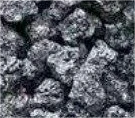
Simply put, ferromanganese alloy is an iron alloy produced by smelting manganese and iron in a specific ratio. Its primary component is manganese (typically 65%-85% by weight), with the remainder consisting of iron and trace elements such as carbon and silicon. It is not a final product but rather a functional material used as a "refining agent" and "alloying additive" in the steel smelting process.
In the symphony of furnace fires during steelmaking, ferromanganese alloy plays an indispensable dual role in purification and strengthening.
The Core Role of Ferro-Manganese Alloy in Metallurgy
1. Deep Deoxidation and Steel Purification
During steel tapping, molten steel contains significant oxygen content. If not removed, this oxygen forms bubbles that severely compromise steel quality. Manganese exhibits exceptional affinity for oxygen, reacting preferentially to form manganese oxides that rise to the slag surface. This process efficiently purifies molten steel, laying a solid foundation for subsequent alloying operations.
2. Efficient Desulfurization and Elimination of Hot Brittleness
Sulfur is a detrimental element in steel, forming low-melting-point iron sulfide that causes cracks during hot working (known as "hot brittleness"). Manganese reacts with sulfur to form high-melting-point manganese sulfide, effectively neutralizing sulfur's harmful effects and significantly improving steel's hot working properties.
3. Alloying and Performance Enhancement
This represents the core value of manganese iron alloys. Manganese dissolved in steel can:
- Significantly increase strength and hardness: Manganese is an effective solid solution strengthening element.
- Greatly enhance wear resistance and toughness: This makes steel containing appropriate manganese content highly suitable for manufacturing wear-resistant plates, rails, construction machinery, and other components subjected to high-intensity abrasion.
- Improve hardenability: In alloy steels, manganese enhances the material's response to heat treatment, enabling components to achieve a more uniform and deeper hardened layer after quenching.
Key Indicators for Selecting High-Quality Ferro-Manganese Alloy
For purchasers and engineers, evaluating the quality of ferro-manganese alloy requires attention to:
- Manganese Content: Directly determines alloying efficiency and required addition amount.
- Carbon Content: Influences the final steel grade and properties.
- Impurity Levels (e.g., phosphorus, sulfur): Serve as a "litmus test" for product purity-lower is better.
- Particle Size and Uniformity: Affect dissolution rate and recovery rate in molten steel.
From the steel reinforcement in skyscrapers to the transmission gears in automobiles, and even the stainless steel sinks we see daily, the contributions of manganese iron alloys are ubiquitous. Though concealed within the final products, they form the cornerstone of efficiency and quality in modern metallurgical industries. As demands for steel performance continue to rise, the research, development, and application of high-performance manganese iron alloys will inevitably deepen.