How do you make ferro chrome?
Dec 06, 2025
Raw Material Screening
The most crucial raw material for ferrochrome is chromite ore. At the plant, the ore is sorted into batches, screened to remove fine powder and sand, then categorized by particle size and composition. A smelting master explained to us: "The furnace feeds on mixed materials. If the feedstock is uneven, the entire furnace operation suffers."
In addition to ore, the following must be added:
- Coke (for reduction)
- Limestone (to adjust slag composition)
- Iron source (some plants use scrap steel)
- These materials are blended according to the formula before proceeding to the next stage.
Electric Furnace Smelting
The current mainstream production method is mineral electric furnace smelting. From the outside, the electric furnace resembles a massive metal pot, but its internal temperature exceeds 1600°C-the very place where ore transforms into alloy.
The entire smelting process can be broadly divided into three parts:
1. Charging and Charging Materials
Workers continuously add ore, coke, and lime to the furnace top based on its condition. The permeability between different materials is critical; otherwise, the furnace may "smother the fire."
2. High-Temperature Reduction
At the furnace bottom, metal oxides are gradually reduced by coke; iron and chromium begin to fuse under intense heat. The deeper the furnace and the more stable the temperature, the more consistent the alloy quality.
3. Iron Tapping
When the molten metal at the furnace bottom reaches the desired state, operators open the tapping hole. Scorching liquid ferrosilicon flows through the trough, its blinding heat sending sparks flying; slag floats to the surface and is separated.
The Second Half of the Production Chain
The molten alloy is poured into casting ladles and cooled into ingots. What follows is the more labor-intensive part:
1. Crushing
Large ingots are mechanically crushed into smaller pieces.
2. Screening
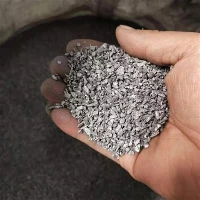
The crushed pieces are screened, impurities removed, and graded according to customer specifications (e.g., 10–50mm, 10–100mm).
3. Testing
Each alloy batch undergoes testing for chromium content, carbon content, sulfur and phosphorus impurities, etc. Different steel mills have varying composition requirements, with larger orders demanding stricter specifications.
These seemingly simple processes determine whether the final product can enter the supply chain of mainstream steel mills.
We provide high-quality metal materials tailored to your needs. Whether you have inquiries about our products, require
a custom order, or need technical support, our team is here to assist you.