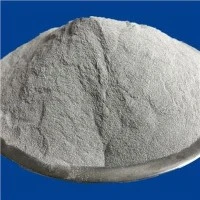
Silicon applications
Jul 20, 2022
1. High-purity single crystal silicon is an important semiconductor material. A small amount of group IIIA elements are doped into single crystal silicon to form a p-type silicon semiconductor; a small amount of group VA elements are doped to form an n-type semiconductor. A p-type semiconductor and an n-type semiconductor are combined to form a p-n junction, which can be made into a solar cell that converts radiant energy into electrical energy. It is a promising material in the development of energy. In addition, widely used diodes, triodes, thyristors, field effect transistors and various integrated circuits (including chips and CPUs in people's computers) are all made of silicon.
2. Metal ceramics, important materials for space navigation. The ceramic and metal are mixed and sintered to make a metal-ceramic composite material, which is resistant to high temperature, rich in toughness, and can be cut. It not only inherits the respective advantages of metal and ceramics, but also makes up for the congenital defects of both. It can be applied to the manufacture of military weapons. The first space shuttle, "Columbia", was able to withstand the high temperatures caused by friction when traveling through the dense atmosphere at high speed, thanks to its 31,000-piece silicon shingle shell.
3. Optical fiber communication, the latest modern means of communication. High transparency glass fibers can be drawn from pure silica. The laser can be transmitted forward through numerous total reflections in the path of the glass fiber, replacing the bulky cable. Optical fiber communication capacity is high, a glass fiber as thin as a hair can transmit 256 telephone calls at the same time; and it is not subject to electrical and magnetic interference, not afraid of eavesdropping, and has a high degree of confidentiality. Optical fiber communication will revolutionize human life in the 21st century.
4. Silicone organic compounds with excellent performance. Silicone plastics, for example, are excellent waterproof coating materials. Spraying silicone on the four walls of the subway can solve the problem of water seepage once and for all. On the surface of ancient cultural relics and sculptures, a thin layer of silicone plastic can be applied to prevent moss from growing and resist wind, rain and weathering. The Monument to the People's Heroes on Tiananmen Square is treated with silicone plastic, so it will always be white and fresh.
5. Due to the unique structure of organic silicon, it has the properties of inorganic materials and organic materials. It has the basic properties of low surface tension, low viscosity-temperature coefficient, high compressibility, high gas permeability, and has high and low temperature resistance, electrical insulation, resistance to Oxidative stability, weather resistance, flame retardancy, hydrophobicity, corrosion resistance, non-toxic, tasteless and physiologically inert and other excellent properties, widely used in aerospace, electrical and electronic, construction, transportation, chemical industry, textile, food, light industry, medical treatment, etc. In the industry, silicones are mainly used in sealing, bonding, lubrication, coating, surface activity, mold release, defoaming, foam suppression, waterproofing, moisture-proof, inert filling, etc. With the continuous growth of the quantity and variety of organic silicon, the application field has been continuously expanded, forming a unique and important product system in the field of new chemical materials. Many varieties are irreplaceable and indispensable for other chemicals.
6. Silicon can improve the hardness of plant stems and increase the difficulty of pest feeding and digestion. Although silicon is not an essential element in plant growth and development, it is also a chemical element necessary for plants to resist adversity and regulate the relationship between plants and other organisms.
Silicon plays a great role in improving plant resistance to abiotic and biotic stress. For example, silicon can improve plant resistance to drought, salt stress, ultraviolet radiation, and pests and diseases. Silicon can improve the resistance of rice to the rice leaf roller. After application of silicon, the defense response of rice to insect feeding is rapidly improved, and silicon plays an alarming role in plant defense.
When rice is attacked by insect pests, silicon can alert rice to rapidly activate the jasmonic acid pathway related to stress resistance, and the jasmonic acid signal in turn promotes the absorption of silicon. The interaction of silicon and jasmonic acid signaling pathway affects the resistance of rice to pests.